
The CIA Said the Science Behind Havana Syndrome Didn’t Exist. Their Own Documents Say Otherwise.
The March 8, 2026 60 Minutes investigation cracked open a story that's been documented in declassified U.S. government files since 1961. The cover-up works because the literature has been gamed.

Last Sunday, 60 Minutes aired its fourth investigation into Havana Syndrome — the cluster of neurological injuries reported by U.S. diplomats, intelligence officers, and military personnel across two dozen countries since 2016.
The headline: undercover Homeland Security agents purchased a portable, concealable microwave weapon from a Russian criminal network in 2024, for approximately $15 million in Pentagon funds. The device has been tested on animals at a U.S. military base for over a year. Tests on rats and sheep produced injuries consistent with those reported by human victims.
That's the news. Here's the part that didn't make the headlines:
The story is being framed as a mystery about a weapon. The historical record suggests something more uncomfortable: the biological mechanisms have been understood for decades.
Dr. David Relman — a Stanford professor of medicine who led two government-commissioned expert panels on Havana Syndrome and later served as a Biden White House adviser — described what happened when his teams concluded that pulsed radiofrequency energy was the most plausible explanation for a subset of the cases. CIA officials pushed back. Their experts, Relman said on camera:
“had dug in opinions going back years about the plausibility of a non-thermal microwave mechanism. In fact, when we began our work, we were briefed by their experts... ‘nothing in the scientific literature will support the idea that microwave energy can do things like this.’ They had made up their minds.”
Read that again. They didn’t say “the evidence is inconclusive,” or “the research is ongoing.” The mechanism itself was implausible — delivered as a briefing to an independent scientific panel before that panel had completed its work. The conclusion came before the investigation.
The CIA’s own declassified documents contradict this directly.
What Allan Frey Showed in 1961
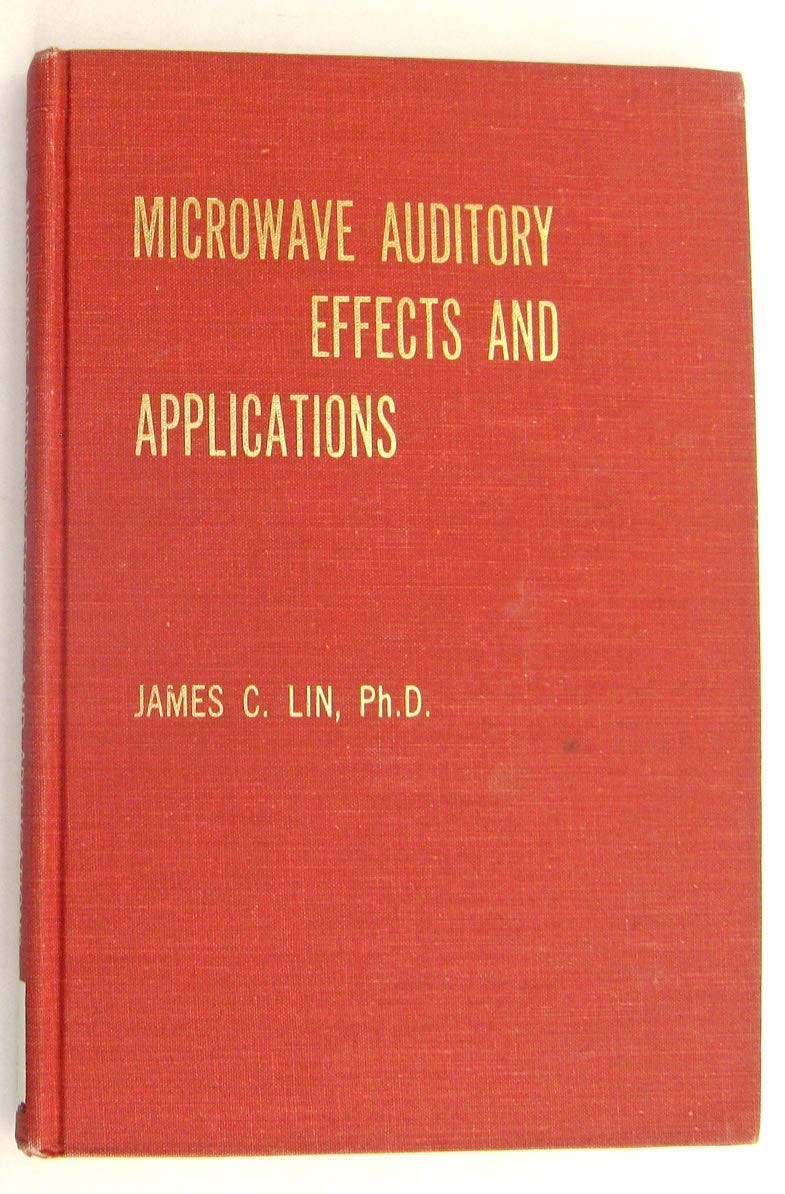
Before getting to those documents, one piece of foundational science matters: the Microwave Auditory Effect, aka “the Frey effect”.
In 1961, Cornell researcher Allan Frey published findings that humans could perceive pulsed microwave radiation as sound — clicks, buzzing, knocking — generated not through the ears, but through pressure waves caused by instantaneous, microscopic expansion of tissue inside the skull produced by very small temperature changes. The expansion is too brief and too small to raise tissue temperature. No sustained heating occurs. The brain simply interprets the mechanical pressure as sound. The phenomenon was replicated across multiple labs over the following decade. The Navy’s own research office funded some of that replication work.
By 1973, military researchers Joseph Sharp and Mark Grove at Walter Reed Army Institute of Research had pushed the Frey effect into direct communication. They recorded their own voices speaking each of the single-syllable words for the digits one through ten. The audio waveforms were then processed so that each time a sine wave crossed zero in the negative direction, it triggered a brief pulse of microwave energy. By irradiating themselves with these voice-modulated pulses, Sharp and Grove were able to hear, identify, and distinguish nine of the ten words — transmitted with no speaker, no receiver, no audio device of any kind. Spoken words, beamed directly into the skull by a modulated electromagnetic field. The experiment was reported in the open scientific literature the following year. The capability had obvious implications that the authors noted without elaboration.
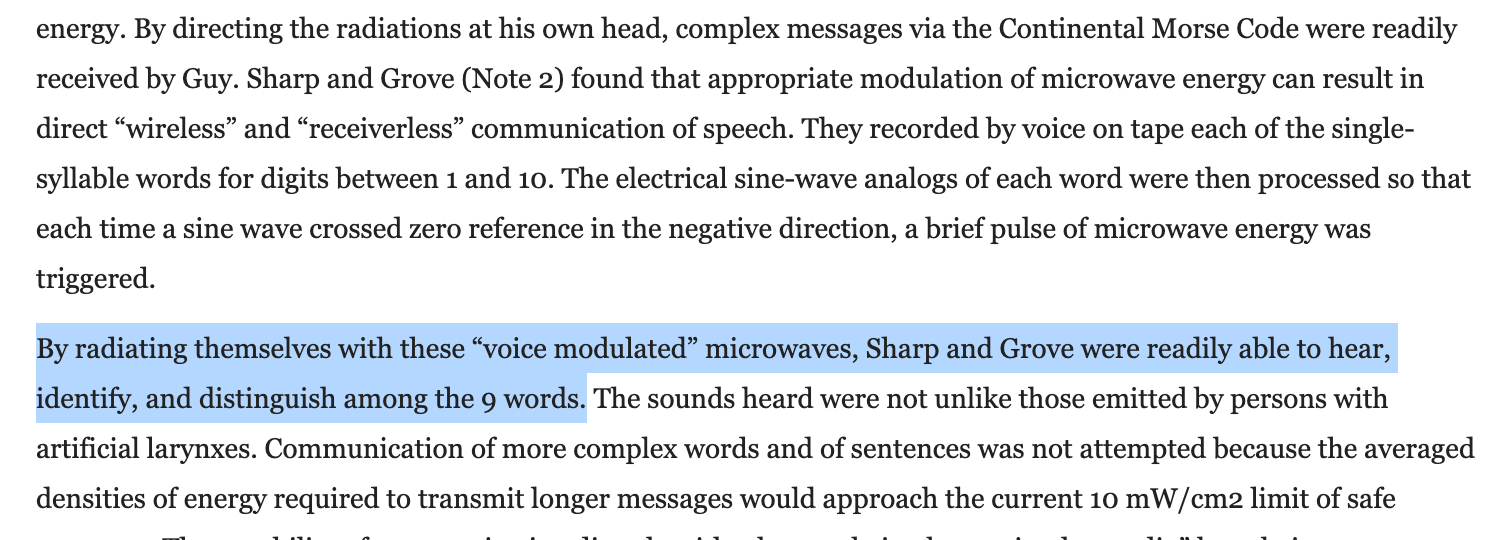
This is the mechanism behind the “sounds in the head” reported by Havana Syndrome victims across two dozen countries. It has been documented in peer-reviewed literature for sixty-five years. The Office of Naval Research helped pay for it.
What the U.S. Government Already Knew by 1976
Three years later, the U.S. government had compiled the full clinical picture from its own sources — before it ever translated a single Soviet document.
The 1976 Glaser bibliography, produced by the Naval Medical Research Institute, catalogued over 3,700 published studies on radiofrequency and microwave biological effects — drawing heavily on Soviet and Eastern European occupational medicine research that had been accumulating since the 1950s. Soviet radar workers and industrial workers exposed to microwave-generating equipment had been presenting with a recognizable syndrome for decades. Glaser catalogued it under the headings “microwave sickness” and “radio-wave sickness”:
tinnitus and clicking sounds perceived inside the head, headaches, fatigue, dizziness and vertigo, sleep disruption, memory and concentration problems, autonomic nervous system instability, disturbed reflexes and coordination.
These symptoms were documented in workers exposed at power densities considered safe under Western thermal-only standards — the same thermal-only standards the CIA’s experts were defending fifty years later.
The DIA Explained the Motive in 1976
The same year, the Defense Intelligence Agency issued its own classified review of Soviet microwave research. Its unclassified summary acknowledged that non-thermal biological effects remained “a controversial issue between scientists in the West and in the Eurasian Communist countries” — and then explained, in its own words, why the West had chosen its position in that controversy:
“If the more advanced nations of the West are strict in the enforcement of stringent exposure standards, there could be unfavorable effects on industrial output and military functions.”
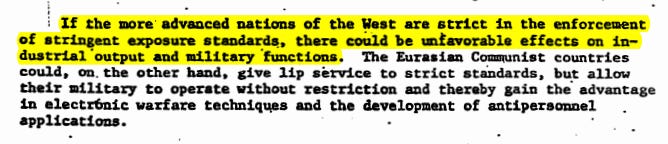
Parse that carefully. The DIA was not warning about Soviet deception. It was articulating the American calculus: strict non-thermal standards would constrain industry and military operations — a tradeoff the United States ultimately chose not to accept. The health effects were real enough to document and study, and real enough to factor into policy discussion. They were simply not real enough to act on, because acting on them carried economic and military costs. The decision to treat the thermal standard as scientifically settled was, by the DIA’s own account, a decision made on grounds that had nothing to do with science.
What the CIA Then Translated in 1977
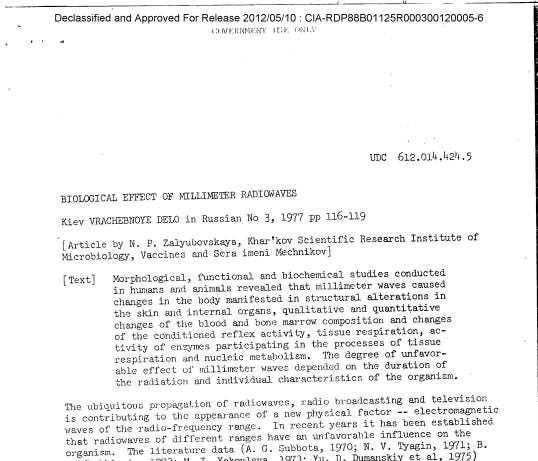
The following year, the CIA translated and distributed a Soviet study by N.P. Zalyubovskaya examining the biological effects of millimeter-wave radiation. The study exposed mice to frequencies between 37 and 60 GHz at 1 milliwatt per square centimeter, 15 minutes daily for 60 days, and compared results against humans occupationally exposed to millimeter-wave generators. The symptom picture matched what Glaser had already catalogued from earlier Soviet occupational research — an independent confirmation of the same underlying biology. Two separate research streams leading to the same clinical outcome.
The CIA translated it and declassified it.
If institutions were willing to shape scientific consensus for economic and military reasons in 1976, the relevant question is not whether they would do so again. It is how — and through which channels — they manage the story when the suppressed truth begins to surface today.
How the Literature Gets Buried Without Anyone Burning It
The CIA’s claim — that nothing in the scientific literature supports biological effects of non-thermal microwave radiation — is only defensible when you control which literature counts.
The mechanism is structural rather than conspiratorial. You establish a regulatory standard that only recognizes thermal harm. Research funded under that standard, designed to evaluate outcomes within that framework, will not find what the framework excludes by definition. You staff the expert panels with scientists whose careers were built inside the thermal-only paradigm. Then you add a second layer: defense contractors and telecommunications companies fund their own studies, designed to return null results, and publish them in sufficient volume to dilute the signal in the broader literature.
This pattern has been quantified. Bioengineering professor Henry Lai at the University of Washington compiled decades of radiofrequency biological effects studies and found a consistent pattern: independently funded research reported biological effects far more often than industry-funded studies examining the same exposures.
This is not quite simple fabrication — it is something more durable than fabrication. It is systematic, industry-funded noise, inserted into the scientific record specifically to make genuine findings look contested. By the time an independent researcher conducts a meta-analysis, the ratio of industry-funded null results to independent positive findings creates the appearance of scientific controversy where the underlying biology is not actually in dispute.
The Glaser bibliography, the Zalyubovskaya translation, and the DIA report all remain part of the public record. Despite all the gaming of the system, the evidence is still there for those willing to look.
The Investigation That Was Built to Find Nothing
What happens when those same biological mechanisms begin forcing their way into the real world? What the 60 Minutes investigation surfaced — confirmed on camera by a former CIA officer who resigned from the AHI unit in disgust — is that the institutional conclusion was reached before the evidence was examined. His unit’s mandate, he said, was to “bring down the temperature” on Havana Syndrome and move the explanation toward atmospheric and environmental causes. Senior staff mocked victims and the investigation closed in 2022.
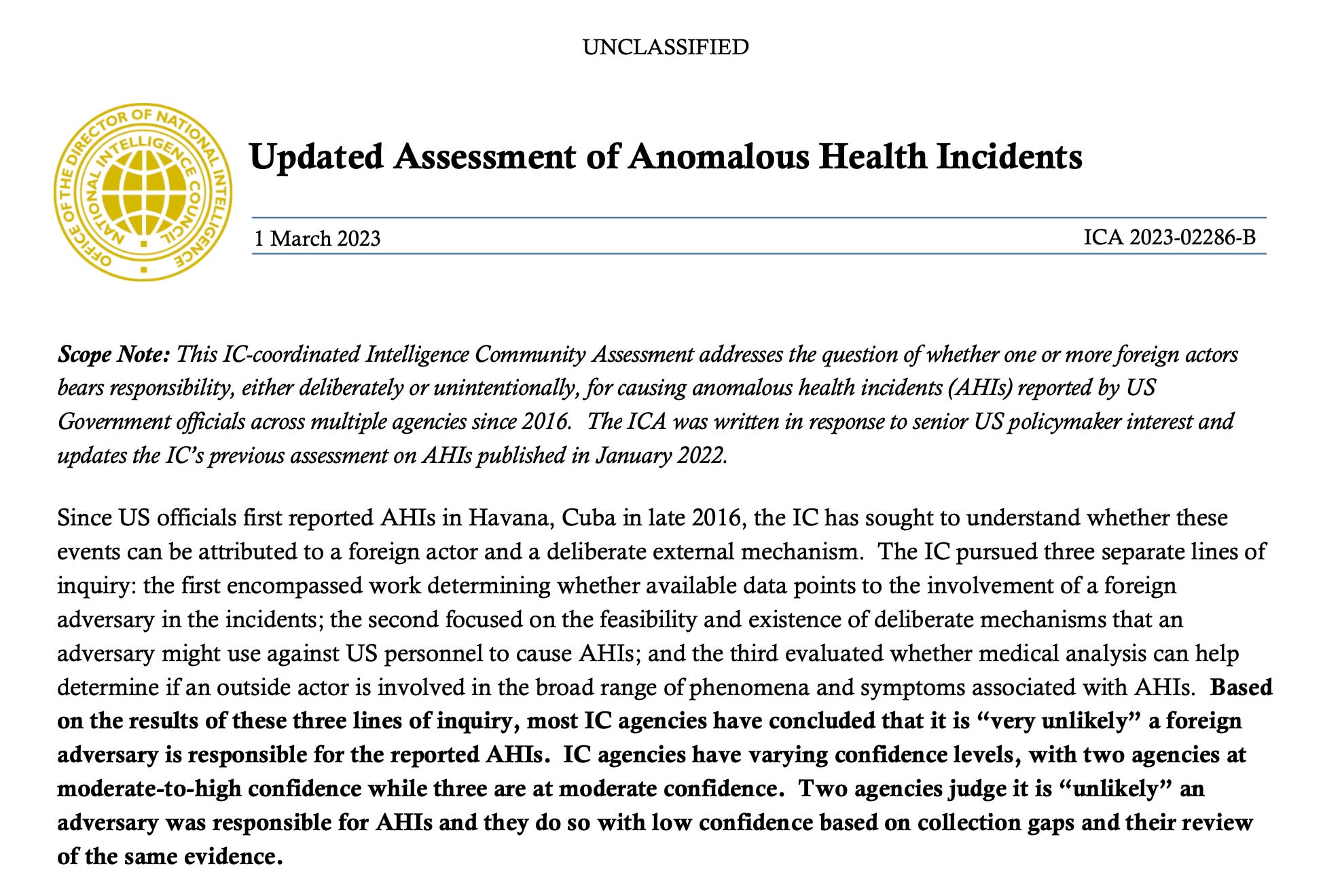
The 2023 intelligence community assessment — concluding it was “very unlikely” a foreign adversary was responsible — was issued while the Pentagon was funding a classified undercover operation to purchase the weapon that may have caused the injuries. A high-level CIA source told 60 Minutes: “This is the biggest cover-up I’ve seen in my adult life.”
A separate source familiar with the U.S. testing of the acquired device told The Insider: the results “refute the bogus assessment that non-thermal energy cannot cause injury.”
Those facts are difficult to reconcile with the official position. They are, however, entirely consistent with what the DIA described in 1976: an institution that had decided, on non-scientific grounds, where the conclusion needed to land.
There is possibly a second reason the story needed to stay buried — one the DIA's 1976 language gestures toward without stating directly. If pulsed microwave energy can injure people at non-thermal power levels, then the question of whether the United States has developed its own version of that capability becomes unavoidable. Acknowledging the science validates the victims of Havana Syndrome. It also opens questions about what is in the U.S. arsenal that those running the cover-up may prefer remain unasked.
This is a Pattern, Not an Anomaly
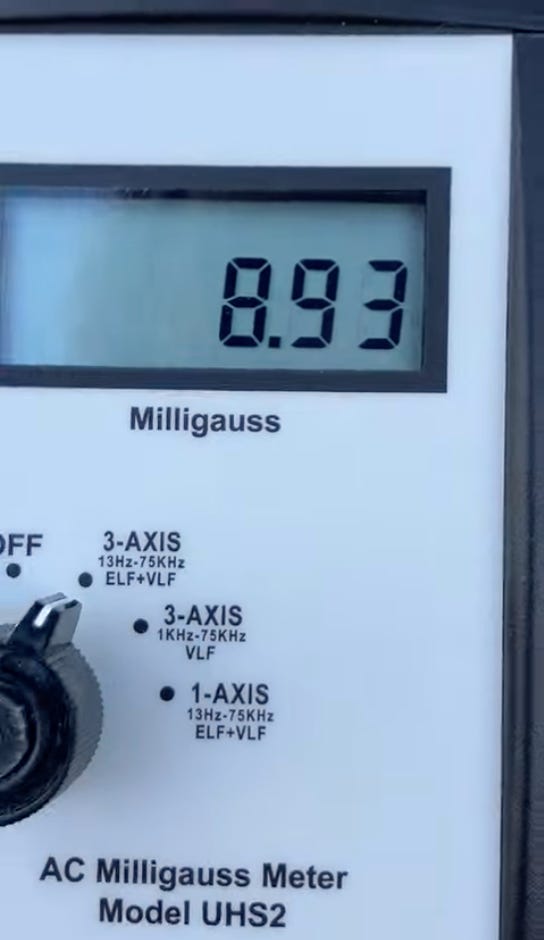
A similar pattern of dismissal appears whenever non-thermal biological mechanisms challenge institutional assumptions. When I published data showing the San Francisco 49ers' decade-long injury struggles — several times the league average in Achilles and patellar tendon ruptures, practicing within range of a massive electrical substation, where I measured 8.9 milligauss adjacent to the practice field — the institutional response was the same: we've looked at the literature and don't see anything.
The pattern is strikingly similar in both cases. To the extent it was taken seriously by the NFL at all, the NFLPA characterized it as a concern for player’s psychological stress. And similarly, when the geopolitical cost of believing the CIA officers and State Department personnel became inconvenient, the psychosomatic explanation reared its ugly head again. The institutional standing of those reporting harm seems to matter not at all.
There is considerably more to say about the full declassified research lineage — from Frey’s 1961 work through DARPA’s classified programs, to the backpack-sized device now in Pentagon hands — and about what fifty years of institutional dismissal has cost the people who reported harm. But for now, the historical record already tells a clear story.
The CIA told investigators that nothing in the scientific literature supports biological effects from non-thermal microwave radiation, going back years before Dr. Relman’s panels ever convened. The CIA itself translated studies that prove otherwise. The DIA explained in writing why that position would be maintained regardless of what the science showed.
A Historical Pattern Worth Remembering
There is another possibility worth considering. Not as a claim about what is happening here, but as a pattern intelligence agencies have used before when uncomfortable truths become impossible to suppress.
The arc of this story: the years of denial by official sources, the victims mocked and their illness dismissed as having psychosomatic explanations, and then a sudden reversal anchored to a proximal Russian device purchased from criminals — follows a pattern that should give pause. The story first surfaced in 2016, and despite years of efforts to downplay it, it refused to go away. The official position was becoming untenable. Confirming the weapon exists while containing it within a foreign intelligence frame is the cleanest available exit from a story that was becoming uncontrollable. It vindicates the victims. It identifies a villain. And it does both without touching the larger question that really matters: does ambient pulsed microwave radiation cause biological harm? That question doesn't have a shadowy Russian villain, it has a regulatory apparatus — and a wireless industry — that would prefer it never be asked.
The 1976 DIA report describes "Radio-wave sickness" as a cumulative occupational condition — not a ballistic event. By accepting the weapon frame, we also accept its logic: if the injury is a shot from a backpack, it's a security matter. If the injury is a biological reality of the frequency itself, it's a regulatory catastrophe. The former is containable, the latter is not. I don't expect this story to change wireless policy. That was never the point of letting it out.
The CIA has a documented history of using trusted media relationships as controlled release valves. In 1975, the Senate Select Committee on Intelligence — known as the Church Committee, after its chairman, Senator Frank Church — confirmed that the agency had cultivated journalist assets to place stories that served institutional purposes. The Committee identified more than fifty journalists working directly with the CIA — a program that became known as Operation Mockingbird — documented in the final report under the categories of “Subsidized Information” and “Propaganda Assets.” The names that emerged were not fringe figures:
Joseph Alsop — one of the most widely syndicated political columnists in the country — admitted the relationship himself.
Arthur Hays Sulzberger, publisher of the New York Times, signed a secrecy agreement allowing the CIA to use the paper as institutional cover.
Henry Luce, founder of Time and Life, allowed CIA officers to operate abroad under the publications’ credentials.
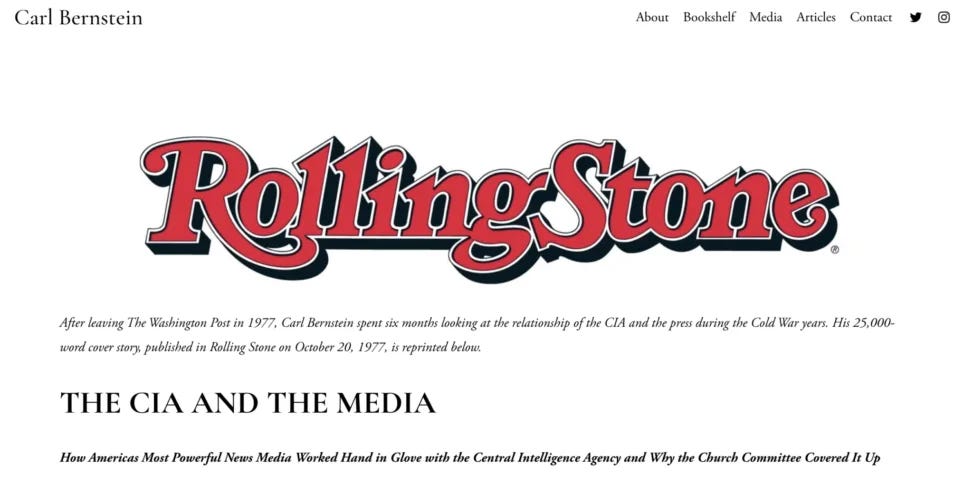
Phil Graham, publisher of the Washington Post, was identified by Carl Bernstein as a primary CIA contact for placing stories.
William Paley, founder of CBS, allowed the network’s resources and personnel to serve agency purposes.
This was not incidental. It was operational infrastructure embedded at the highest levels of the American press — including CBS, the network that airs 60 Minutes.
The technique has a name. The “limited hangout” — admitting to a smaller, contained truth to protect a larger, systemic one — was described in those terms by Nixon aides during Watergate, but the practice predates them. In 1975, CIA Director William Colby adopted a strategy of selective disclosure — proactively revealing the agency’s involvement in foreign assassination plots, the “Family Jewels” in CIA parlance. These were dramatic crimes, historical, and safely in the past. What it protected were the Crown Jewels: CHAOS, the agency’s years-long program of domestic surveillance targeting American citizens — journalists, activists, political figures — on U.S. soil, and the broader operational infrastructure the agency had no intention of exposing. You give the investigators the villain they came for and the investigation closes before it reaches the operational present.
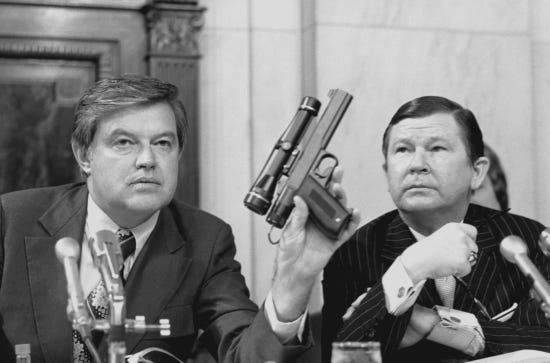
The Church Committee’s findings produced the Foreign Intelligence Surveillance Act of 1978 — a legal framework requiring court-authorized warrants before any agency could surveil American citizens on U.S. soil. It was the clearest legislative consequence of everything the committee had uncovered. Less remembered is the Smith-Mundt Act of 1948, which had been on the books since before the CIA even had a domestic operations problem: it explicitly prohibited the U.S. government from directing propaganda at its own citizens. The two laws together defined the post-Church Committee boundary — the state could not spy on you without a warrant, and it could not run information operations against you at all.
In 2012, the Smith-Mundt Modernization Act removed the ban on domestic dissemination of government-produced information. While framed as a digital-age update to an outdated Cold War statute, it effectively dissolved the firewall between foreign influence operations and the American public — buried in a “must-pass” defense spending bill, passed with almost no public debate, to permit propaganda operations by the state against its own citizens.
None of this proves that the current story is being managed in the same way. We cannot know the motivations of the journalists, intelligence officials, or investigators involved, nor what conversations took place behind closed doors. But the historical record makes one thing clear: intelligence agencies have repeatedly used selective disclosure and media relationships to shape how sensitive information reaches the public. That history does not tell us what happened here — but it should make us cautious about accepting the boundaries of the story as they are presented.
What we can do is examine the documents themselves. The 60 Minutes investigation relies largely on what sources chose to disclose. Declassified government records are different. Sources tell you what they want you to hear. Documents show what institutions committed to paper at the time — when they believed no one outside the agency would ever read it. I read the DIA document. Those are different things.
The DIA wrote down the motive for suppressing non-thermal effects in 1976. No source has ever volunteered that.
None of this means the 60 Minutes reporting is wrong. The device probably exists. The sourcing is likely accurate as far as it goes. The real question is how far it goes — and who decided where it stops. The historical record is often far simpler than the debate surrounding it. We may not know the full story until far in the future, when the equivalent of today’s classified reports are finally declassified.
What we do know is that the biological effects of non-thermal microwave radiation were studied inside the U.S. government decades ago. They were translated, catalogued, and discussed.
They were not unknown. They were inconvenient.
Citations
60 Minutes, “Targeting Americans” (S58, E24), CBS, March 8, 2026.
CBS News full transcript, “Targeting Americans,” March 8, 2026. https://www.cbsnews.com/news/us-military-tested-device-that-may-be-tied-to-havana-syndrome-60-minutes-transcript/
Harris, Shane, et al. “A scientist built a device to disprove Havana Syndrome. It hurt him instead.” Washington Post, February 14, 2026. https://www.washingtonpost.com/national-security/2026/02/14/havana-syndrome-cia-norway-experiment/
“The biggest cover-up of my adult life”: Inside the CIA’s attempt to make Havana Syndrome disappear.” The Insider, March 2026. https://theins.ru/en/inv/290088
Glaser, Z.R. Bibliography of Reported Biological Phenomena and Clinical Manifestations Attributed to Microwave and Radio-Frequency Radiation. Naval Medical Research Institute, September 1976. https://ehtrust.org/wp-content/uploads/Naval-MRI-Glaser-Report-1976.pdf
Zalyubovskaya, N.P. “Biological Effects of Millimeter Radiowaves.” Vrachebnoye Delo, No. 3, 1977. CIA-declassified English translation. https://mdsafetech.org/wp-content/uploads/2019/02/biological-effects-of-millimeter-wavelengths.-zalyubovskaya-declassif-by-cia-1977-biol-eff-mm-waves.pdf
Defense Intelligence Agency. Biological Effects of Electromagnetic Radiation (Radiowaves and Microwaves) — Eurasian Communist Countries. DST-1810S-074-76, March 1976. https://www.orsaa.org/uploads/6/7/7/9/67791943/__us_dia_1976_biological_effects_of_electromagnetic_radiation.pdf
European Parliament, STOA. Health Impact of 5G. PE 690.012, July 2021. https://www.europarl.europa.eu/RegData/etudes/STUD/2021/690012/EPRS_STU(2021)690012_EN.pdf
Frey, A.H. “Auditory System Response to Modulated Electromagnetic Energy.” Aerospace Medicine 32(12): 1140–1142, 1961.
Sharp, J.C. and Grove, H.M. “Individual Perception of Pulsed Microwave Radiation.” Symposium on Biological Effects and Measurement of Radio Frequency/Microwaves, HEW Publication (FDA) 77-8026, 1973.
Lai, H. Compilation of Research Abstracts on Biological Effects of Radiofrequency Radiation and ELF/Static Electromagnetic Fields, 1990–2025. University of Washington. https://www.saferemr.com/2018/02/effects-of-exposure-to-electromagnetic.html
Church Committee. “Final Report, Book III: Supplementary Detailed Staff Reports on Intelligence Activities and the Rights of Americans.” Senate Select Committee on Intelligence, April 23, 1976. Available at: https://www.aarclibrary.org/publib/church/reports/book3/contents.htm
Colby, William. Honorable Men: My Life in the CIA. Simon & Schuster, 1978.
Foreign Intelligence Surveillance Act of 1978. 50 U.S.C. § 1801 et seq.
United States Information and Educational Exchange Act of 1948 (Smith-Mundt Act). 22 U.S.C. § 1431 et seq.
Smith-Mundt Modernization Act of 2012. H.R. 5736, Public Law 112-239, Section 1078. Available at: https://www.congress.gov/bill/112th-congress/house-bill/5736
Bernstein, Carl. “The CIA and the Media.” Rolling Stone, October 20, 1977.
Full text available at: http://www.carlbernstein.com/magazine_cia_and_media.php
Justesen, Don R. “Microwaves and Behavior.” American Psychologist, Vol. 30, No. 3, March 1975, pp. 391–401. https://ce399.wordpress.com/2011/06/02/microwaves-and-behavior-american-psychologist-31975/
The Sharp & Grove published paper itself:
Sharp, J.C., Grove, H.M., and Gandhi, O.P. “Generation of Acoustic Signals by Pulsed Microwave Energy.” IEEE Transactions on Microwave Theory and Techniques, Vol. 22, 1974, pp. 583–584.